Welcome to this website!

Leave Your Message

What Are the Top Kitchen Tools Utensils for Global Buyers?

Choosing the right Kitchen Tools Utensils can shape cooking efficiency, product safety, and customer satisfaction. Global buyers need more than attractive designs or low prices. They must examine material quality, practical performance, packaging, and supplier reliability. A stainless steel whisk should feel balanced in the hand. Silicone spatulas should resist heat without becoming soft or sticky. Storage containers should close firmly and remain easy to clean.

Different markets also have different expectations. Restaurant buyers may prioritize durability, while home retailers often value color, compact storage, and gift-ready presentation. Experienced sourcing teams usually compare samples before placing large orders. They check edges, handles, joints, coatings, and finishing details. Small defects can become expensive complaints later. Product descriptions should also match the physical sample, including dimensions and material claims.

No list is perfect.

Price matters, but it should not control every decision. A cheaper utensil may require faster replacement, creating more waste and hidden costs. Buyers should request clear specifications, consistent quality records, and dependable communication from suppliers. Independent testing may be useful for products that contact food or face repeated heat exposure. Packaging deserves attention too. A damaged box can reduce the value of an otherwise reliable product.

This guide examines popular kitchen tools for international purchasing. It considers function, material choices, user comfort, sourcing risks, and long-term value. Some recommendations may need adjustment for regional preferences. That is part of responsible buying. Careful comparison often reveals that the most useful utensil is not the newest one, but the one that performs reliably every day.
What Are the Top Kitchen Tools Utensils for Global Buyers?

Understanding the Role of Kitchen Tools and Utensils

Kitchen tools and utensils do more than support cooking. They shape safety, speed, hygiene, and consistency in every kitchen. For global buyers, a useful tool must match local cooking habits, workspace limits, and food preparation standards. A sturdy chef’s knife, stable cutting board, heat-resistant spatula, reliable tongs, and accurate measuring tools form a practical foundation.

In my sourcing experience, material quality often matters more than decorative design. Stainless steel resists corrosion when properly maintained. Food-grade silicone protects coated cookware and tolerates regular heat exposure. A balanced handle can reduce wrist strain during repeated chopping or stirring. Small details matter, too. Smooth joints are easier to clean, while deep grooves can trap food residue. Buyers should also check dimensions, packaging strength, care instructions, and available testing documents.

Utensils must serve real routines.

A compact peeler may suit small apartments, while a wide strainer helps busy family kitchens. Local dishes also influence priorities. Some households need strong ladles for soups; others depend on fine graters, rolling pins, or rice paddles. I once underestimated the importance of handle length when evaluating cooking tools. A tool that felt comfortable in one kitchen became awkward near a deep pot. That mistake showed me that performance depends on context, not appearance alone. Even a well-designed utensil can fail if users cannot clean, store, or control it comfortably. 񟿿

What Are the Top Kitchen Tools Utensils for Global Buyers? - Understanding the Role of Kitchen Tools and Utensils

Common kitchen utensils, their everyday roles, and practical considerations for buyers.
Utensil Category Common Examples Primary Kitchen Role Common Materials Key Buying Considerations Care and Use Notes
Food Preparation Chef’s knife, paring knife, kitchen shears Cutting, trimming, and portioning ingredients Stainless steel, carbon steel, wood, or polymer handles Blade sharpness, balance, handle comfort, and safe storage Hand-washing can help protect edges and handles; sharpen knives as needed
Measuring Measuring cups, measuring spoons, kitchen scale Measuring ingredients for recipes and portion control Stainless steel, glass, plastic, or silicone Clear markings, suitable measurement units, readability, and accuracy Check scale calibration periodically; dry measuring tools before storage
Mixing and Whisking Whisk, mixing spoon, mixing bowls Combining ingredients, aerating mixtures, and preparing batters Stainless steel, wood, silicone, glass, or food-contact plastic Comfortable grip, bowl stability, appropriate size, and compatibility with cookware Use non-scratch utensils with coated cookware; follow care instructions for wood
Turning and Serving Spatula, turner, serving spoon, slotted spoon Turning food during cooking and transferring portions Stainless steel, nylon, silicone, wood, or combinations Heat resistance, edge shape, grip, and suitability for the cooking surface Observe the utensil’s stated temperature limit and avoid prolonged contact with hot pans
Straining and Draining Colander, fine-mesh sieve, skimmer Draining pasta, rinsing produce, and separating solids from liquids Stainless steel, aluminum, or food-contact plastic Mesh size, drainage speed, handle strength, and ease of cleaning Rinse promptly after use, especially when handling starchy or acidic foods
Peeling and Grating Vegetable peeler, box grater, handheld grater Removing skins and shredding or finely grating ingredients Stainless steel, aluminum, or polymer handles Sharpness, grip security, blade configuration, and cleaning access Handle sharp edges carefully and clean grating surfaces with a suitable brush
Food Handling Tongs, ladle, pasta server Gripping, lifting, portioning, and serving foods Stainless steel, silicone, nylon, or wood Secure grip, reach, heat tolerance, and food-specific shape Choose surfaces that will not scratch cookware and clean joints or hinges thoroughly
Baking and Dough Preparation Rolling pin, pastry brush, dough scraper Rolling dough, applying glazes, and handling or dividing dough Wood, stainless steel, silicone, or food-contact plastic Surface finish, comfortable handling, flexibility, and ease of cleaning Keep wooden tools dry after washing; remove dough residue before it hardens
Opening and Portioning Can opener, bottle opener, pizza cutter Opening packaged foods and dividing items into portions Stainless steel, carbon steel, and polymer or rubberized handles Safe operation, comfortable grip, cutting performance, and durable moving parts Clean food-contact components carefully and dry metal parts to limit corrosion
Storage and Organization Utensil holder, drawer organizer, hanging rack Keeping frequently used tools accessible and organized Stainless steel, wood, ceramic, or plastic Available counter or drawer space, stability, drainage, and cleaning access Allow wet utensils to dry fully and clean holders regularly

Exploring Essential Utensil Categories for Everyday Cooking

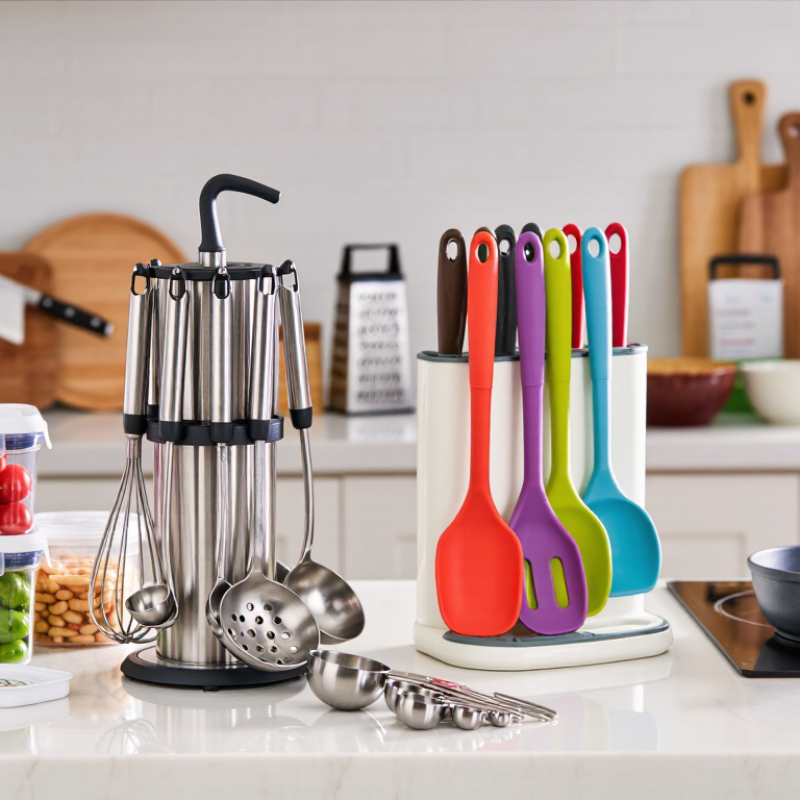
Everyday cooking depends less on having many tools than on choosing useful utensil categories. A strong starter set should include stirring, cutting, measuring, and serving tools. Wooden or heat-resistant silicone spatulas handle frying, folding, and scraping. A chef’s knife, small paring knife, and stable cutting board cover most preparation tasks. Measuring cups and spoons improve consistency, especially when recipes use unfamiliar units. Tongs, a ladle, and a slotted spoon make hot-food handling safer and cleaner. Small details matter. A comfortable grip can prevent fatigue during long meal preparation.

Different kitchens need different materials. Stainless steel resists stains and suits high-heat cooking. Silicone protects coated cookware, while untreated wood feels gentle and comfortable. However, wood needs thorough drying and regular inspection. Cracks can hold moisture and odors. Utensils should match cooking habits, storage space, and cleaning facilities. A compact household may prefer nesting tools. A busy shared kitchen may need duplicate tongs and spatulas. I once underestimated the value of a sharp peeler. Preparation became slower, and food waste increased. Not every “essential” tool is essential for everyone.

Tips: Choose one reliable tool from each category before buying extras. Check heat limits, food-contact safety, handle comfort, and dishwasher guidance. Keep knives protected and cutting boards dry between uses. Replace utensils when handles loosen, surfaces split, or edges become difficult to clean. Test balance in your hand when possible. A beautiful tool can still feel awkward. Leave room to reconsider.

What Are the Top Kitchen Tools & Utensils for Global Buyers?

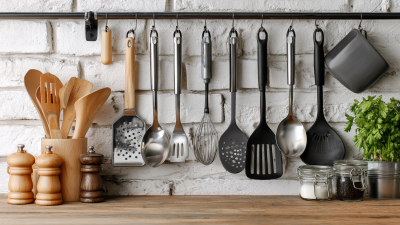
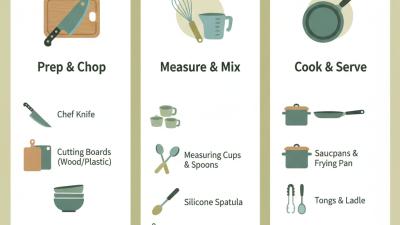
Essential utensil categories for everyday cooking, shown as a practical starter assortment rather than company or market-share data.

Cutting, measuring, mixing, turning, serving, and cleaning tools cover the most common preparation and cooking tasks in a basic kitchen. Buyers can adjust the assortment according to local cuisine, cookware, and household size.

Comparing Materials, Design, and Durability

For global buyers, kitchen tools should be judged by materials, design, and durability together. Material affects heat resistance, cleaning, comfort, and service life. Stainless steel handles frequent washing and usually resists staining. However, thin steel can bend under heavy pressure. Silicone protects nonstick surfaces and handles hot cookware safely, but low-quality silicone may retain odors. Wooden tools feel warm and comfortable, although they require careful drying. This sounds simple. It is not.

Design determines how reliably a tool performs in real kitchens. A balanced handle reduces wrist strain during long preparation work. Smooth joints collect less food residue and are easier to inspect. Hanging holes can improve storage, but they may weaken narrow handles. Edges should be rounded without becoming difficult to grip. Weight matters. A very light turner may feel convenient, yet it can lack control with dense foods.

Durability depends on construction, maintenance, and user habits. Riveted or securely molded connections often outlast loose, decorative fittings. Heat limits should be clearly stated, especially for utensils used near ovens or hot oil. Buyers should request food-contact test documents relevant to the destination market. Requirements differ between regions, so one certificate may not satisfy every importer. Independent testing adds confidence, but paperwork cannot replace practical inspection.

Small flaws matter. Check the details. A tool that survives commercial washing may still feel awkward in a home kitchen. Personally, I would test grip, flexibility, and cleaning after repeated use before placing a large order.

Choosing Tools for Different Cuisines and Cooking Methods

Choosing tools for different cuisines starts with the cooking method, not the size of a set. A rounded ladle suits soups and thin sauces, while a flat turner slides beneath delicate fish or pancakes. For stir-frying, a long-handled spatula keeps food moving in a hot pan and protects hands from splashes. A sturdy pair of tongs helps turn grilled vegetables without crushing them.

Materials matter, too. Stainless steel handles firm foods well, but it can scratch some nonstick surfaces. Heat-resistant silicone is gentler for scraping a pan, though it may feel less precise when lifting heavy ingredients. Wooden spoons work nicely in thick stews and can feel comfortable during long stirring. Check care instructions; some tools need hand-washing or thorough drying. Small details matter.

Rice paddles, noodle strainers, and wide serving spoons can make familiar dishes easier to prepare, but they are not essential for every kitchen. Match their size to your pots and cooking habits. A tiny strainer may frustrate someone draining a large pot, while an oversized wok spatula can be awkward in a narrow skillet. There is no perfect universal set. I still find that one useful utensil can sit untouched if its handle feels wrong, so comfort deserves a quick test before buying.

Evaluating Safety, Care, and Global Buying Needs

What Are the Top Kitchen Tools Utensils for Global Buyers?

Safety and maintenance should guide every kitchen utensil purchase. Look for smooth edges, stable handles, and materials designed for food contact. Heat resistance matters near pans, ovens, and boiling water. A tool that bends beside a hot pot can cause burns quickly. Check care instructions carefully, especially for wood, silicone, and coated surfaces. Dishwasher cleaning may save time, but repeated high heat can shorten a utensil’s life. No utensil is perfect. Even experienced buyers sometimes overlook tiny seams where moisture and food particles collect.

Tips: Request material specifications, care instructions, and food-contact test documents from suppliers. Confirm that documents match the product being shipped. Test a sample before placing a larger order. A simple trial can reveal loose handles, strong odors, staining, or unclear labels.

Global buyers also need practical fit. Choose tools with neutral designs, clear measurements, and instructions that can be translated easily. Packaging should protect edges and handles during long-distance transport. Humid regions may require extra attention to storage and corrosion resistance. Replacement parts and consistent quality are useful for hospitality projects. Buyers should also check destination-market requirements rather than assuming one certificate works everywhere. This step takes time. It can prevent expensive rework later. A lower price may look attractive, yet poor durability, confusing care guidance, or damaged packaging can raise the real cost.