Top 10 Plastic Containers from China for Global Buyers?
The global market for plastic containers has witnessed significant growth in recent years. According to a report by Grand View Research, it is anticipated to reach USD 250 billion by 2025. This surge is driven by the increasing demand for sustainable packaging solutions across various industries. Many buyers are turning to China, a leader in plastic container manufacturing, for high-quality and cost-effective options.
Plastic containers serve diverse purposes, from food storage to industrial applications. Their versatility and durability make them a staple in both domestic and commercial settings. However, the choices can be overwhelming. The focus should not only be on price but also on safety, material quality, and environmental impact. With endless options available, buyers must carefully evaluate their choices.
Many suppliers have improved their production processes to meet international standards. However, it is crucial to conduct thorough due diligence. Not all manufacturers guarantee the same level of quality. Ultimately, choosing the right plastic containers can significantly influence business outcomes. Buyers need to stay informed and make thoughtful decisions.
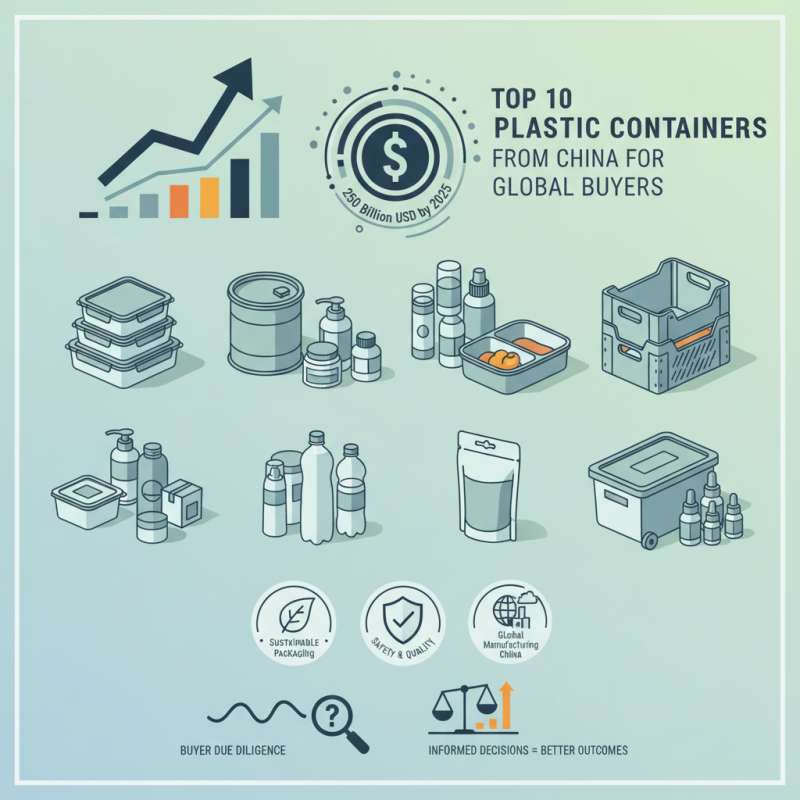
Overview of Plastic Container Manufacturing in China
China plays a vital role in the global plastic container manufacturing industry. In 2022, the country produced over 30 million tons of plastic. This accounts for nearly a quarter of the world's total production. The manufacturing sector is driven by both domestic and international demands.
The production process is often complex. It involves sourcing raw materials, designing molds, and employing advanced technologies. Many manufacturers utilize injection molding and blow molding techniques. These methods offer flexibility and efficiency, but also sometimes lead to inconsistencies in quality. Reports indicate that around 10% of containers fail to meet stringent quality standards.
Sustainability is a growing concern. Many companies are beginning to explore eco-friendly materials. Yet, the transition remains slow. Only about 15% of companies have adopted biodegradable plastics. Buyers must balance the demand for quality with the environmental impact of plastic production. This complex landscape presents both challenges and opportunities in sourcing plastic containers from China.
Top 10 Plastic Containers from China for Global Buyers
| Container Type |
Material |
Capacity (L) |
Color |
Usage |
Export Markets |
| Storage Bin |
PP (Polypropylene) |
30 |
Blue |
Household |
North America, Europe |
| Food Container |
PE (Polyethylene) |
5 |
Transparent |
Food Storage |
Asia, Middle East |
| Water Bottle |
PET (Polyethylene Terephthalate) |
1.5 |
Green |
Beverages |
Global |
| Toolbox |
ABS (Acrylonitrile Butadiene Styrene) |
15 |
Red |
Tools Storage |
Europe, Australia |
| Paint Container |
HDPE (High-Density Polyethylene) |
20 |
White |
Industrial |
North America, Latin America |
| Cosmetic Jar |
PMMA (Polymethyl Methacrylate) |
0.5 |
Pink |
Cosmetics |
Asia, Europe |
| Lunch Box |
PP (Polypropylene) |
2 |
Yellow |
Food |
Global |
| Bucket |
HDPE (High-Density Polyethylene) |
10 |
Black |
Household |
Asia, Africa |
| Egg Tray |
PS (Polystyrene) |
50 |
Brown |
Food Transportation |
North America, Europe |
| Dog Food Container |
PP (Polypropylene) |
25 |
Gray |
Pet Supplies |
Global |
Key Factors Driving the Global Demand for Chinese Plastic Containers
The global demand for Chinese plastic containers is on the rise. Several factors contribute to this trend, making these containers essential for various markets. One significant reason is cost-effectiveness. Chinese manufacturers offer competitive prices without compromising quality.
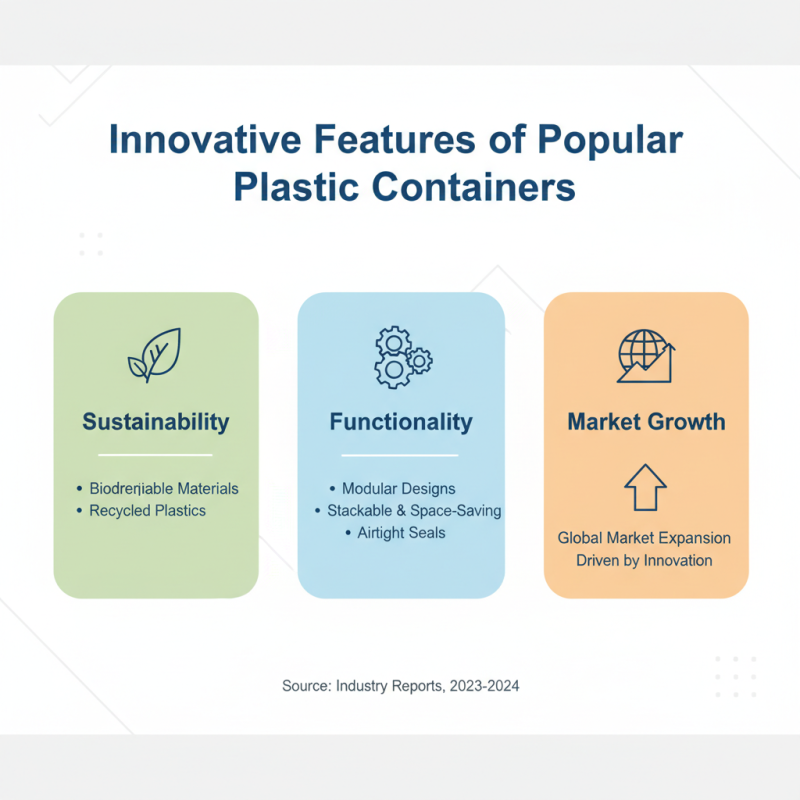
Sustainability is also a key factor driving demand. Many buyers seek eco-friendly options. China has begun producing recyclable and biodegradable plastic containers, meeting this growing need. As international standards tighten, companies need to adapt quickly. The ability of Chinese suppliers to innovate and produce sustainably becomes a vital asset.
Tips:
- When sourcing plastic containers, prioritize suppliers who offer transparency in their manufacturing processes.
- Research their sustainability practices.
- It's essential to select partners who can uphold quality and ethical standards.
- However, be cautious about the supply chain. Products may vary significantly in quality.
- Always request samples before making bulk orders.
Top 10 Plastic Container Manufacturers in China
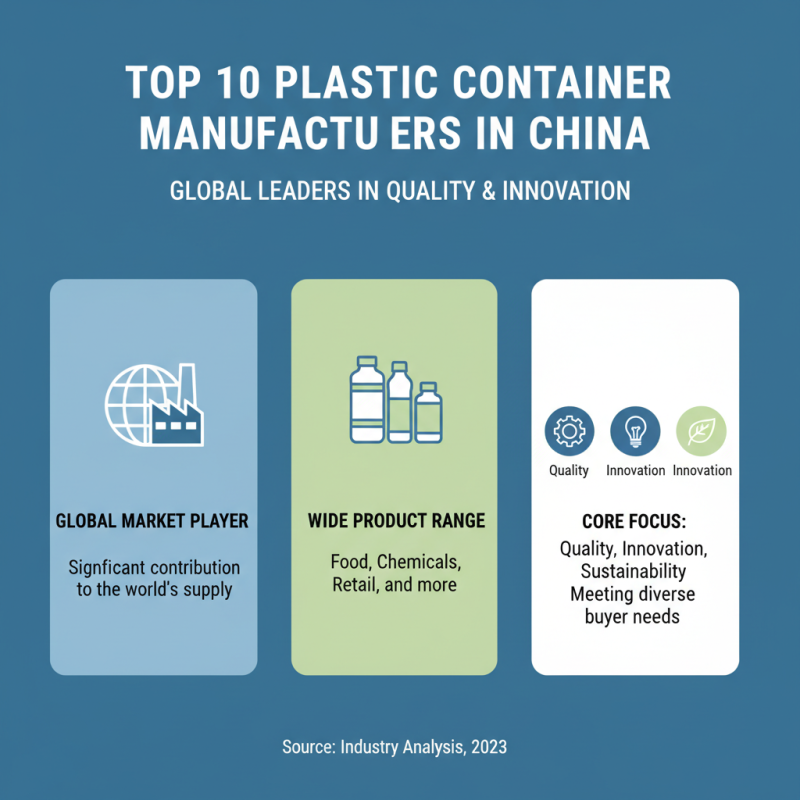
China is a significant player in the global plastic container market. Its manufacturers excel in producing a wide range of containers suitable for various industries. These companies focus on quality, innovation, and sustainability. They offer container solutions for food, chemicals, and retail, meeting diverse buyer needs.
Manufacturers in China have established rigorous quality control measures. They ensure that every container produced adheres to safety standards. However, the rapid growth of this industry leads to challenges. For buyers, selecting the right manufacturer can be overwhelming. Variability in product quality and communication can cause complications.
Despite these challenges, many manufacturers are committed to excellence. They invest in technology and skilled labor. This focus helps them improve their production processes. Buyers should pay attention to certifications and customer reviews. This due diligence is essential for a successful partnership with a manufacturer.
Sustainability Practices in China's Plastic Container Production
China's plastic container production has increasingly focused on sustainability. The industry has adopted practices that aim to reduce environmental impact. According to a 2022 report by the International Association of Plastics Manufacturers, 40% of Chinese manufacturers have implemented recycling initiatives. These programs focus on reusing post-consumer materials in new products, which helps reduce waste.
Another notable practice is the shift towards biodegradable materials. A substantial number of companies have begun exploring bioplastics derived from renewable resources. This shift reflects a growing consumer demand for eco-friendly options. The market for bioplastics in China was valued at $3.5 billion in 2021, demonstrating a robust growth trend.
Despite progress, challenges remain. Many manufacturers still rely heavily on traditional plastics, driven by cost and availability. Transitioning to sustainable practices often requires significant investment. Industry experts suggest that overcoming these barriers is crucial for long-term sustainability. As awareness increases, the push for greener alternatives will likely intensify, urging the industry to evolve further.