Welcome to this website!

A good Collapsible Strainer should save space without making food preparation awkward. That sounds simple. In practice, several small design choices matter.
Grand View Research’s recent kitchenware market analysis highlights convenience, multifunctionality, and compact storage as important consumer priorities. These trends explain why collapsible kitchen tools continue attracting attention in smaller homes, apartments, and travel kitchens. Euromonitor International’s Home and Garden research also points toward practical, space-conscious household products. However, market popularity does not prove daily performance.
This guide examines ten leading options through a practical kitchen lens. The comparison considers basket capacity, silicone flexibility, frame stability, drainage speed, handle comfort, and storage footprint. A useful model should open smoothly and remain firm above a sink. Its holes should release water quickly without allowing rice or small pasta to escape. Heat resistance also deserves attention, especially when draining freshly cooked noodles. The U.S. Food and Drug Administration emphasizes that food-contact materials should be suitable for their intended use. Shoppers should therefore check manufacturer material details instead of trusting vague labels.
There is no perfect strainer. Some wide models drain quickly but occupy more cabinet space. Smaller designs store neatly but may overflow during family-size cooking. A soft silicone rim can protect cookware, although it may flex under heavy food. These trade-offs are easy to overlook. Our selection aims to make them visible, using reported specifications, user-focused testing considerations, and established kitchen-safety guidance. Still, product claims can change, and real kitchens are unpredictable. That is worth remembering before choosing one.
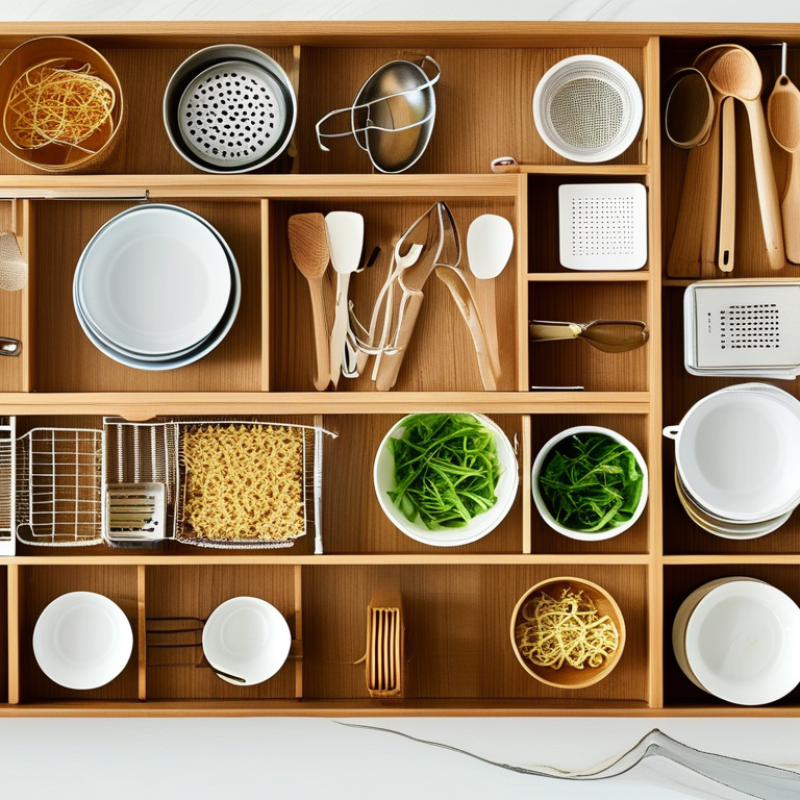
Collapsible strainers are kitchen baskets that fold down after use. Most combine a rigid rim with flexible, food-grade silicone walls. Small drainage holes let water escape while holding pasta, berries, vegetables, or rinsed grains. Their main advantage is storage. A full-size colander can become nearly flat inside a drawer.
In daily cooking, place the strainer over a sink or stable bowl. Pour food slowly, then lift it with both hands. The flexible sides save space, but they can bend under heavy potatoes or hot pasta. The FDA Food Code 2022 advises using food-contact surfaces that are smooth, durable, and easy to clean. Choose a model with sealed joints and accessible holes. USDA estimates that 30–40% of the U.S. food supply is lost or wasted. A strainer cannot solve that problem, but controlled rinsing may prevent dropped food and messy transfers. I have found that deep baskets feel safer, though shallow designs dry faster. That trade-off deserves attention.
Tips: Check the heat rating before draining boiling water. Keep fingers away from steam. Test the rim over your sink before filling it. Wash trapped starch from the folds immediately. Do not assume “dishwasher-safe” means every surface will dry well. Some hidden creases remain damp and develop odors. A quick visual inspection matters.
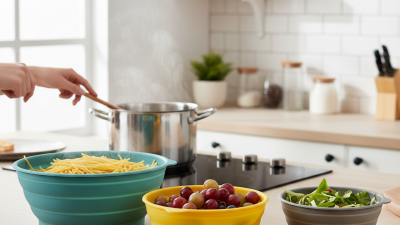
A collapsible strainer saves cabinet space, but its design matters more than its novelty. In my kitchen, I compare the open diameter, folded height, and usable capacity before buying one. A narrow bowl may drain pasta slowly, especially when filled with heavy noodles. Measure your sink, too. Some models sit securely across the basin, while others need a separate bowl underneath.
Material affects safety and durability. Food-grade silicone should feel firm, not thin or sticky. A reinforced rim helps the strainer keep its shape under weight. Look for heat resistance that matches your cooking habits, and always check the maker’s care instructions. Not every strainer suits boiling water, dishwashers, or oven heat. That detail is easy to overlook.
Drainage holes deserve close attention. Small holes help retain rice and berries, but they can slow water flow. Larger holes release water quickly, though small foods may escape. Handles should stay cool and provide a reliable grip when the basket is full. I once chose a model with comfortable handles but weak support; it tipped beside the sink. Stability matters more than appearance. A flat base, strong locking points, and a smooth interior also simplify cleaning. Food trapped in folds becomes unpleasant quickly. I still overfill mine sometimes. That is my mistake, not the strainer’s.
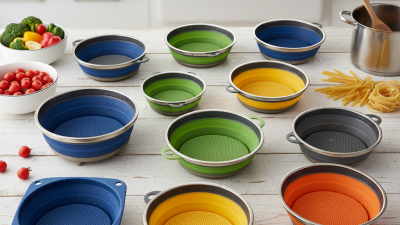
Ten top collapsible strainers serve different kitchen tasks, not just pasta. A silicone over-sink strainer handles rinsing lettuce and draining berries. A pot-clip model suits noodles and boiled potatoes. A collapsible basket works well for rice, beans, and larger vegetables. A fine-mesh version catches seeds from citrus juice or loose tea. A micro-perforated strainer helps with quinoa. A deep colander supports family-sized pasta. A shallow model drains delicate herbs without crushing them. A folding steamer insert lifts dumplings above simmering water. A bowl-shaped strainer catches liquid for sauces. A compact cup strainer fits small sinks and travel kitchens.
Practical testing matters. Look for heat resistance, stable feet, easy-clean folds, and drainage holes that do not trap rice. The USDA recommends washing produce under running water, so a wide rim and steady base improve control. The 2024 UNEP Food Waste Index Report estimated 1.05 billion tonnes of food were wasted globally in 2022, with households responsible for 60 percent. Better draining cannot solve waste alone, but it can reduce soggy leftovers and discarded herbs. Small details count.
I have found one weakness. Deep collapsible baskets may collapse unevenly when overloaded. That is easy to miss. Choose a model with reinforced edges and measured capacity. The FDA Food Code emphasizes cleanable, nonabsorbent food-contact surfaces, making smooth silicone and rust-resistant metal safer long-term choices. Still, no strainer cleans itself. A narrow fold can hide starch, so inspect the hinges after every sticky meal.
A collapsible strainer saves drawer space, but safe handling still matters. Before use, inspect the hinges, handles, and flexible joints for cracks or looseness. Place it securely over a stable sink or bowl. Never balance it on a narrow rim. Hot steam can burn your hands, so use dry grips and pour slowly. Keep the strainer away from direct flames and heated surfaces.
Cleaning should begin immediately after draining food. Rinse away starch, oil, and small particles before they dry inside the folds. Use warm water, mild dish soap, and a soft brush for seams and drainage holes. Avoid sharp tools, which can damage the flexible material. Check the care instructions before using a dishwasher. I once left a strainer folded while wet; it developed a stale odor by the next morning. That mistake was preventable.
Let every section air-dry completely before collapsing the strainer. Store it upright or in a ventilated cabinet, rather than beneath heavy cookware. Do not force stiff hinges or stretch the bowl beyond its normal shape. Monthly inspection helps catch splitting edges, loose supports, or permanent warping. Replace the utensil if it no longer sits firmly over the sink. A small defect can become a sudden spill when carrying hot pasta or vegetables.
Regular rinsing and drying should be done after every use. A thorough cleaning is recommended at least weekly, while silicone folds, mesh, handles, and drainage holes should be inspected monthly for trapped food, mold, cracks, or deformation. Clean and sanitize the strainer immediately after contact with raw meat, poultry, seafood, or eggs.