What is the Best Colander Basket for Your Kitchen Needs?
Choosing the right colander basket for your kitchen is essential. This minor piece of kitchenware can significantly impact your cooking efficiency. A colander basket is not merely a bowl with holes; it plays a vital role in food preparation.
Imagine quickly rinsing fresh vegetables or draining pasta. The best colander basket should be durable and easy to handle. Consider the size, material, and stability. Many people overlook these details, resulting in frustration. An unsuitable colander can lead to spills, wasted food, or even injuries.
Reflect on your cooking habits. Do you cook pasta often, or do you prefer washing fruits and vegetables? Each kitchen has unique needs. Sometimes, we settle for the first option that catches our eye. This choice may not be the best. In the end, investing time to find the right colander basket can save you effort and enhance your cooking experience.
What to Consider When Choosing a Colander Basket for Your Kitchen
Choosing the right colander basket for your kitchen can influence your cooking experience. Consider the material first. Stainless steel is durable. Plastic is lightweight but can warp. Look for a colander that won't easily bend. The size matters too. A larger basket can handle big batches of pasta or vegetables. However, a smaller size may fit better in your kitchen space.
Another point is the design. Some colanders have feet or handles for stability and ease of use. A poorly designed colander can lead to spills. Keep an eye on the holes as well. They should be small enough to retain smaller foods. Large holes could let grains fall through.
Think about storage too. A collapsible colander can save space. But check if it’s sturdy when in use. Sometimes, we overlook the practical aspects and choose based on looks. It’s tempting to aim for aesthetics, but functionality is key. Reflect on what you truly need before making a purchase.
Materials and Durability: A Comparative Analysis of Colander Types
When choosing a colander, material matters significantly. Stainless steel is popular for its robustness. It resists rust and won’t warp easily. Yet, metal colanders can be heavy and may scratch sensitive surfaces. On the flip side, plastic colanders are lightweight and come in many colors. They are ideal for everyday use but may wear down over time. Heat exposure can lead to cracking, which is a frequent issue.
Silicone colanders blend flexibility with durability. They collapse for storage, making them space-efficient. However, some users might find them less stable when draining heavier items. Bamboo colanders provide an eco-friendly option but require more maintenance. They can absorb moisture, leading to mold if not dried properly. Each type has pros and cons that depend on personal kitchen habits.
Consider your needs carefully. Think about daily use versus occasional tasks. The best colander for your kitchen won’t just be durable; it should fit your style and needs. It’s easy to overlook these details, but they can make a significant difference in your cooking experience. The wrong choice may lead to frustration and inefficiency. Reflect on your cooking patterns before making a purchase.
Material Comparison of Colander Baskets
Size and Capacity: Finding the Right Fit for Your Cooking Needs
When choosing a colander basket, size and capacity matter significantly. A perfect colander should accommodate various amounts of food. Consider how often you cook for yourself or your family. If you often prepare meals for large groups, opt for a larger colander. However, if your cooking is typically for one or two people, a smaller option may suffice.
Many people overlook the importance of capacity. A colander that is too small can lead to spills and frustration. Imagine draining pasta or rinsing vegetables only to find food spilling over the sides. On the other hand, a colander that is overly large can be cumbersome. It might take up too much space in storage. Therefore, assessing your kitchen space is crucial.
Another aspect to ponder is the design. Some colanders have wide openings, while others are more compact. Those with wider holes allow for quick drainage but may lose smaller items. Evaluating your cooking habits helps. Do you often rinse grains or small vegetables? Consider how size impacts usability, and reflect on what truly meets your kitchen needs.
Design Features: The Impact of Ergonomics on Usability and Safety
When choosing a colander basket, ergonomics plays a crucial role. A well-designed colander should be easy to handle. Look for comfortable, non-slip handles that fit your hand well. This improves grip, especially when draining hot liquids. A lightweight design reduces strain on your wrists and arms.
Consider the shape of the colander. A wide base offers stability. This prevents spilling when you drain pasta or vegetables. However, a narrow, tall colander can be tricky. It may tip over if not held properly. A balanced design always wins.
**Tips:** Always test the grip before purchasing. Hold it for a moment. See how it feels in your hand. Don’t rush. Check if it fits well in your sink. A colander that doesn't fit can cause accidents. Remember, safety should come first. A good design not only enhances usability but also minimizes the risk of slips and spills.
What is the Best Colander Basket for Your Kitchen Needs?
| Feature |
Description |
Usability Rating (1-5) |
Safety Rating (1-5) |
| Material |
Durable, rust-resistant stainless steel |
5 |
5 |
| Size |
Large capacity for various food items |
4 |
5 |
| Handle Design |
Ergonomic grip for easy handling |
5 |
4 |
| Drainage Holes |
Optimally sized for quick draining |
5 |
5 |
| Stackability |
Easily nested for storage |
4 |
4 |
Cost-Effectiveness: Evaluating Price vs. Performance in Colander Options
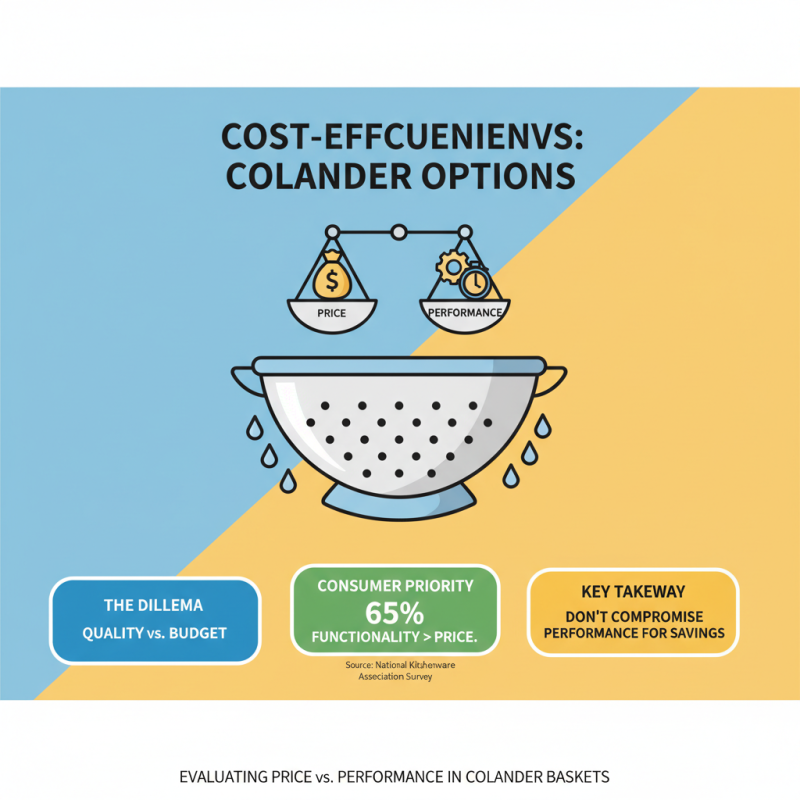
When considering the best colander basket, evaluating cost-effectiveness is crucial. Many consumers often face the dilemma of choosing a high-quality colander that fits within their budget. A recent survey by the National Kitchenware Association found that 65% of shoppers prioritize functionality over price. However, performance should not be compromised for savings alone.
Materials play a significant role in performance. Stainless steel, for example, is durable and resistant to rust. Some reports indicate that plastic colanders, while less expensive, may warp or discolor over time. This can lead to additional expenses as consumers replace them more frequently. A quality colander can last for years, offering excellent value. Cost-per-use can be a helpful metric. Spending slightly more upfront can save money in the long run.
Aesthetics also matter. Many colanders are designed for both function and style. Consumers want items that can be displayed in their kitchens. According to market research, 40% of buyers seek a balance between appearance and usability. A well-designed colander enhances the cooking experience but often comes at a higher price. These choices highlight the importance of reflecting on personal kitchen needs and preferences.