2026 Top Kitchen Colander Trends for Global Buyers?
In recent years, the kitchen colander has evolved beyond its traditional role. Today, it reflects changing consumer preferences and design innovations. As we approach 2026, global buyers are keen to explore the latest trends. Understanding these shifts can enhance your kitchen experience.
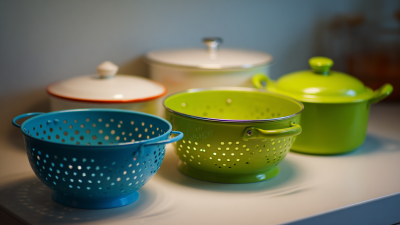
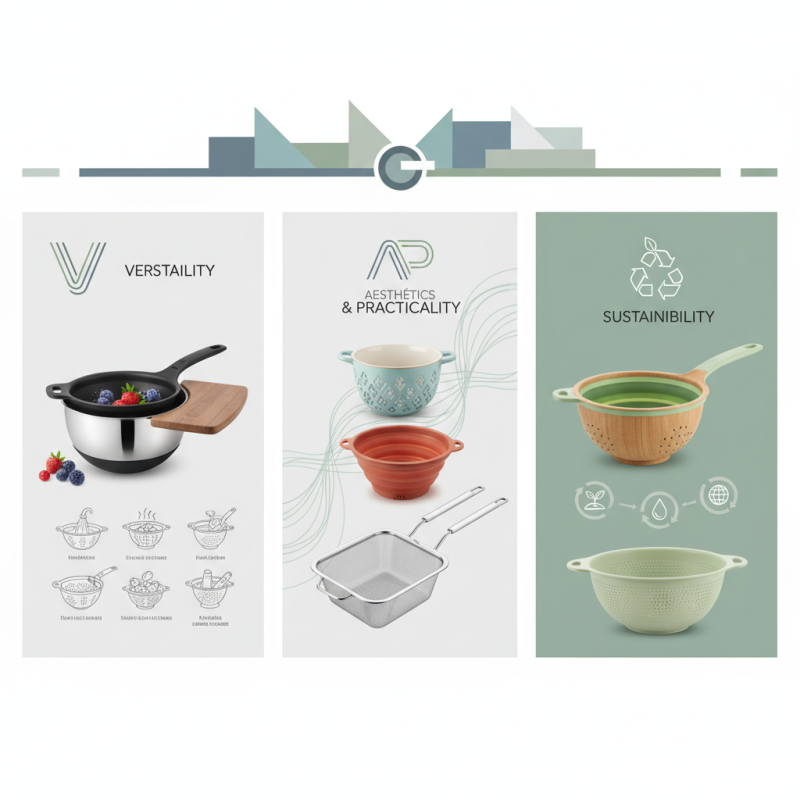
Recent trends emphasize versatility in kitchen colander designs. Many now feature multi-functional capabilities, blending aesthetics with practicality. For instance, colanders are available in various materials and colors. They're not just for draining pasta; they serve multiple purposes and save preparation time. Yet, as styles evolve, some designs may sacrifice stability for style. It's essential to find a balance that suits your cooking needs.
Lastly, sustainability plays a crucial role in the future of kitchen colanders. Eco-friendly materials are gaining popularity. Buyers increasingly seek products that minimize environmental impact. However, it’s vital to ensure that these products don’t compromise on durability. The trend of integrating sustainability in design opens new avenues for kitchen tools. Engaging in this market requires a discerning eye and a commitment to quality.
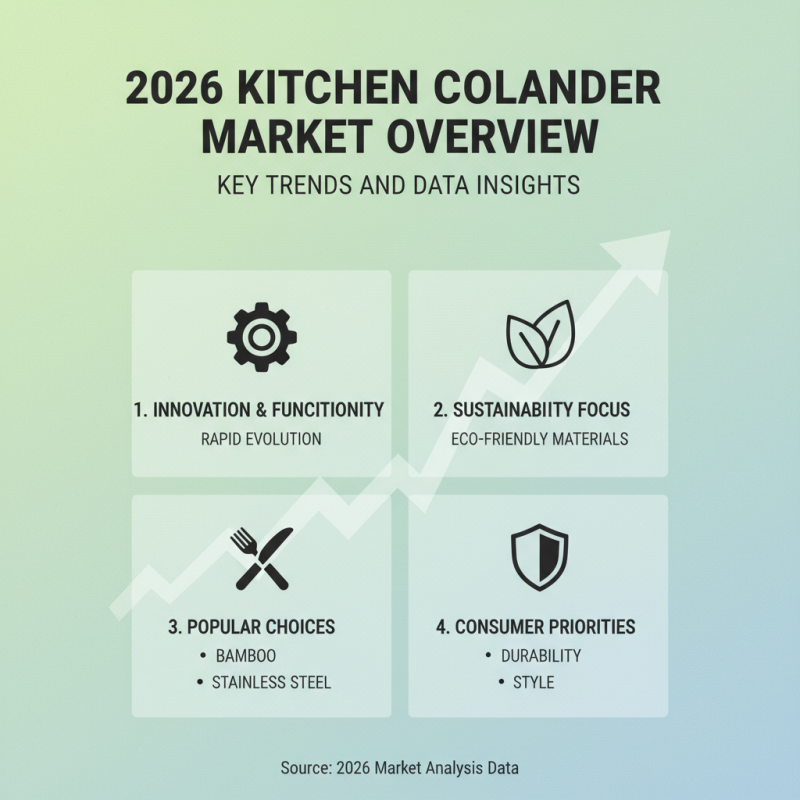
2026 Kitchen Colander Market Overview: Key Trends and Data Insights
The kitchen colander market is evolving rapidly. In 2026, buyers seek innovation and functionality. Sustainability trends are shaping consumer preferences. More buyers are looking for eco-friendly materials. This makes bamboo and stainless steel popular choices. The focus is on durability and style.
Design plays a significant role. Colanders with unique shapes catch the eye. Multi-functional designs are also gaining traction. Some products double as serving bowls, enhancing their appeal. Bright colors and fun patterns are trending. These features attract younger consumers who value aesthetics.
Yet, challenges persist in the market. Some manufacturers struggle with product quality. Others may not meet sustainable practices. This inconsistency can frustrate buyers. It reveals a need for better transparency in sourcing materials. Global buyers must navigate these complexities carefully.
Sustainable Materials in Colander Manufacturing: A 2026 Perspective
Sustainable materials are reshaping the colander manufacturing industry. With consumer awareness rising, businesses are adapting their strategies for eco-friendly products. In 2026, data shows that 40% of global buyers prefer colanders made from biodegradable materials. This shift is crucial, as traditional plastic manufacturing contributes significantly to pollution.
Manufacturers are exploring options like bamboo and recycled plastics. Bamboo is renewable and offers durability. Reports suggest that bamboo colanders have doubled in popularity over the past two years. Furthermore, recycled plastics are being used more frequently, with a 15% increase in market adoption. However, challenges remain. Sourcing reliable recycled materials can be inconsistent, affecting quality.
The market landscape is changing slowly. Not all manufacturers embrace sustainable practices. Some may resort to cheaper options that harm the environment. Buyers must remain vigilant. Demand for transparency in sourcing increases yearly. As consumers become more knowledgeable, they drive the push for sustainable materials in kitchenware. Major industry reports predict that eco-friendly colanders will dominate the market by 2026.
Innovative Designs Influencing Colander Adoption Among Global Buyers
The kitchen colander has seen significant design innovations, influencing global adoption among buyers. According to a recent industry report, the global kitchen colander market is expected to grow by 5% annually through 2026. One driving factor is the push for multifunctional designs. Consumers now prefer colanders that not only drain but also serve as mixing bowls or storage containers. This versatility adds value in compact kitchens.
Sustainability trends are another key influence. Buyers are increasingly interested in eco-friendly materials. Using BPA-free plastics or biodegradable options can meet this demand. A study from the Global Market Insights suggests that these sustainable choices can lead to a 30% increase in consumer interest. Some designs now come with embedded measuring units, further enhancing their functionality while reducing kitchen clutter.
Tip: When choosing a colander, consider its drainage efficiency. Look for designs featuring larger holes for faster water flow. Additionally, think about storage. Folding or stackable options can save valuable space. Remember, functionality isn’t everything. A well-designed colander should complement your kitchen aesthetics. Choose wisely.
2026 Top Kitchen Colander Trends for Global Buyers
| Trend |
Description |
Material |
Market Adoption Rate (%) |
Region Popularity |
| Eco-friendly Designs |
Colanders made from sustainable materials promoting environmental awareness. |
Bamboo, Recycled Plastic |
30% |
North America, Europe |
| Multi-functional Use |
Colanders designed for multiple kitchen tasks beyond draining. |
Silicone, Stainless Steel |
45% |
Asia, Europe |
| Space-saving Designs |
Compact colanders that can be easily stored in small kitchens. |
Plastic, Collapsible Materials |
35% |
North America, Asia |
| Advanced Drainage Systems |
Colanders with innovative drainage technology for faster drying. |
Metal, High-grade Plastic |
50% |
Global |
| Stylish Aesthetics |
Colanders that serve as attractive kitchen decor. |
Ceramic, Decorative Plastic |
25% |
Europe, North America |
Consumer Preferences and Usage Patterns for Colanders in 2026
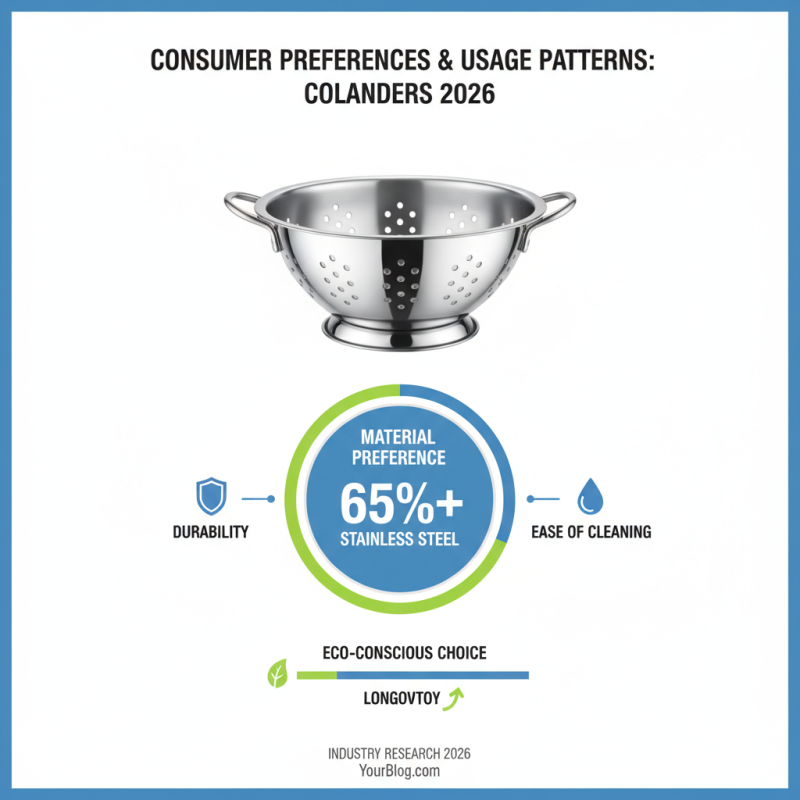
In 2026, kitchen colanders will see shifts in consumer preferences and usage patterns. According to industry research, over 65% of buyers prefer colanders made from stainless steel for durability and ease of cleaning. This material offers longevity, appealing to eco-conscious consumers who prioritize sustainable choices in their kitchens.
Usage patterns showcase an increasing trend towards multifunctional colanders. Survey data reveals that 72% of users appreciate designs that allow for both draining and serving. Features like collapsible designs are becoming popular, as they save space and enhance functionality. However, some consumers report frustrations with flimsy designs that compromise usability.
Understanding these patterns is crucial for manufacturers aiming to meet evolving consumer needs. Innovative designs that combine practicality with aesthetics can capture a larger market share. Yet, makers must also be aware of possible quality control issues. Balancing style, utility, and reliability will be key in meeting the diverse demands of global buyers.
Regional Insights: Top Markets Fueling the Colander Industry Growth
The colander market is experiencing notable growth, driven by diverse regional demands. North America and Europe lead in consumption. Health-conscious consumers prefer colanders that help drain excess water from fruits and vegetables. In Asia, the traditional designs meet both modern and cultural needs, making them popular among users.
Tips: Choose colanders made from durable materials. They should be easy to store and clean. Consider sizes that cater to various cooking needs.
Sustainability is a critical aspect in markets like Europe. Eco-friendly materials resonate well with buyers looking for responsible kitchenware. Lightweight designs are also gaining traction. However, it’s important to assess how these innovations impact overall functionality.
In emerging markets, affordability plays a significant role. Many consumers seek value and functionality. They may not prioritize style or brand. This presents a challenge for manufacturers aiming to cater to evolving tastes while keeping costs low.
2026 Top Kitchen Colander Trends for Global Buyers